

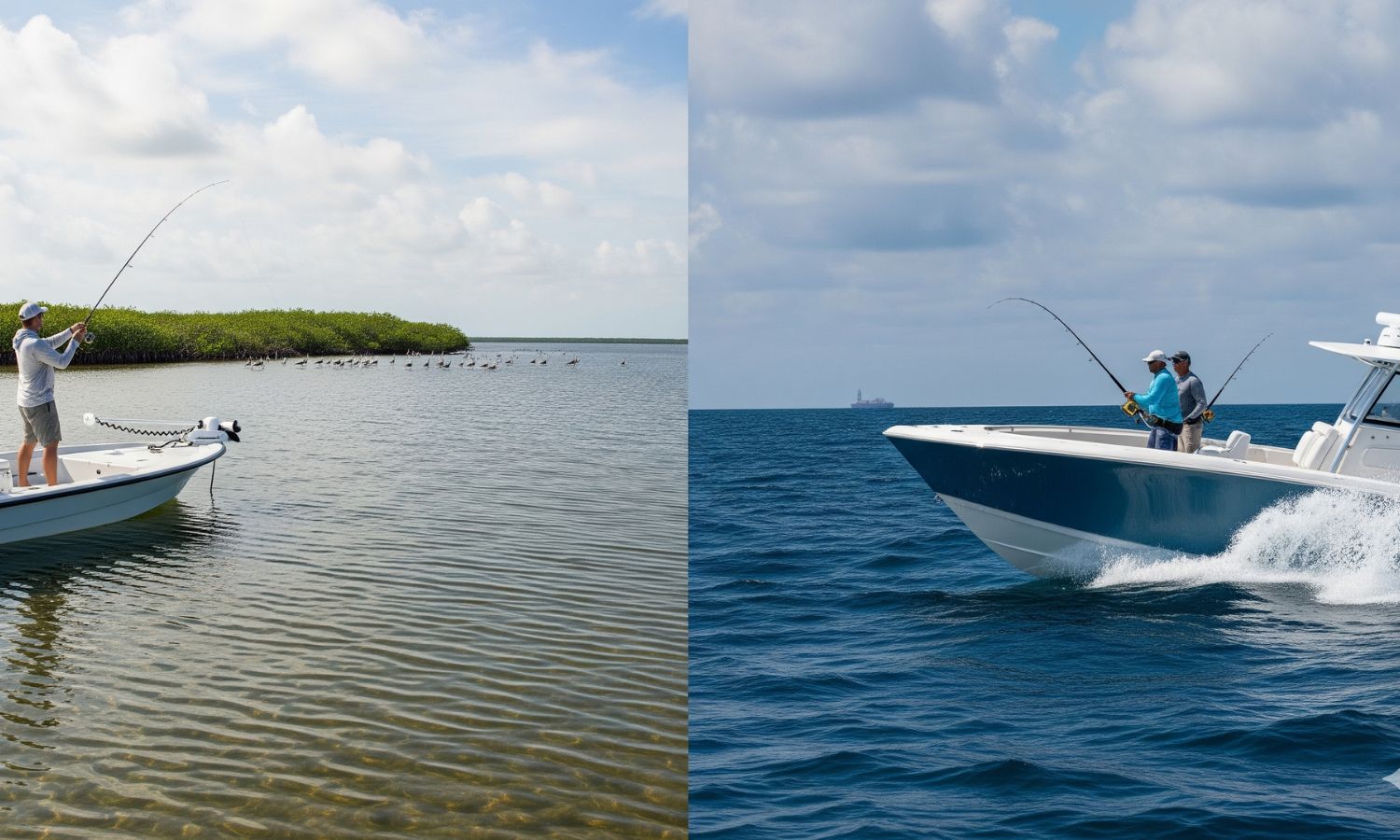
The eternal question for many anglers: should I stay close to the shore or venture into the deep blue? The debate between inshore and offshore fishing is a classic one, with passionate advocates on both sides. The truth is, there’s no right or wrong answer; the best choice for you depends on your experience level, what you’re hoping to catch, and the kind of adventure you’re seeking.
At Fly High Watersports, we’re all about helping you create unforgettable memories on the water. Whether you’re a seasoned pro or just starting, understanding the key differences between inshore and offshore fishing is the first step toward planning your perfect trip. In this guide, we’ll break down everything you need to know to make an informed decision and get you hooked on your next fishing excursion.
Exploring Inshore Fishing
What is Inshore Fishing?
Inshore fishing, as the name suggests, takes place in waters close to the coastline. Generally, this means fishing in depths of less than 30 meters. Think bays, estuaries, flats, and channels – all teeming with a diverse array of marine life. One of the biggest advantages of inshore fishing is its accessibility. You don’t need a massive, specialized boat to get in on the action; in fact, some of the best inshore fishing can be done from a kayak, a small skiff, or even by wading right into the water.
Inshore fishing is a fantastic option for beginners and families with young children. The calmer, protected waters make for a more comfortable and less intimidating experience. Plus, you’ll still have plenty of opportunities to reel in some impressive catches. From feisty redfish and speckled trout to flounder and sheepshead, the inshore waters of the Gulf Coast offer a thrilling challenge for anglers of all skill levels. If you’re looking for a great inshore fishing experience, consider the world-class inshore fishing in Venice, Louisiana, a renowned destination for anglers.
The Inshore Fishing Experience
An inshore fishing trip is all about a more relaxed and intimate connection with the marine environment. You’ll be navigating through picturesque marshes and backwaters, getting an up-close look at the coastal ecosystem. The techniques used in inshore fishing are often more hands-on and require a bit of finesse. You might find yourself sight-casting to a school of redfish, using light tackle to entice a wary trout, or learning the art of popping corks.
The beauty of inshore fishing lies in its simplicity and the sheer variety of species you can encounter. It’s a fantastic way to hone your skills, learn about different types of bait and lures, and enjoy a beautiful day on the water without having to venture too far from shore.
Exploring Offshore Fishing
What is Offshore Fishing?
Offshore fishing, also known as deep-sea fishing, is a whole different ball game. This is where you’ll find the big, powerful, and often migratory fish that inhabit the deeper waters of the open ocean. We’re talking about venturing miles offshore, sometimes even beyond the sight of land, in search of pelagic giants like tuna, marlin, sailfish, and wahoo.
Offshore fishing requires a larger, more robust vessel that can handle the unpredictable conditions of the open ocean. These boats are typically equipped with advanced navigation and fish-finding technology, as well as heavy-duty tackle designed to handle the immense power of these deep-sea predators.
The Offshore Fishing Experience
An offshore fishing trip is an adventure in every sense of the word. It’s a full-day commitment that often starts before sunrise and ends long after sunset. The journey to the fishing grounds can be an experience in itself, with the possibility of spotting dolphins, sea turtles, and other marine life along the way.
Once you reach your destination, the real excitement begins. The techniques used in offshore fishing are all about covering a lot of water and attracting the attention of these big-game fish. Trolling with multiple lines, kite fishing, and deep-dropping are just a few of the methods you might employ. The thrill of a screaming reel and the adrenaline-pumping battle that ensues when you hook into a monster fish is an experience that will stay with you for a lifetime. For those interested in this kind of adventure, learning about sport fishing is a must.
Inshore vs. Offshore: A Head-to-Head Comparison
| Feature | Inshore Fishing | Offshore Fishing |
| Location | Bays, estuaries, flats, channels | Deep open ocean |
| Depth | Less than 30 meters | 30 meters and deeper |
| Boat | Smaller boats, kayaks, skiffs | Larger, more powerful boats |
| Target Species | Redfish, speckled trout, flounder, sheepshead | Tuna, marlin, sailfish, wahoo |
| Techniques | Sight-casting, light tackle, popping corks | Trolling, kite fishing, deep-dropping |
| Experience Level | Beginner-friendly, great for all levels | More suitable for experienced anglers |
| Trip Duration | Half-day or full-day | Full-day, often longer |
| Cost | Generally more affordable | More expensive due to fuel and equipment |
Which is Right for You?
So, how do you choose between inshore and offshore fishing? Here are a few things to consider:
- Your Experience Level: If you’re new to fishing, inshore is a great place to start. The calmer waters and less demanding techniques will allow you to build your confidence and learn the basics. If you’re a seasoned angler looking for a new challenge, offshore fishing will definitely put your skills to the test.
- Your Budget: Inshore fishing is generally more affordable than offshore fishing. The shorter trip durations and smaller boats mean you’ll spend less on fuel and charter fees.
- Your Time Commitment: Inshore trips can be as short as a few hours, making them a great option if you have limited time. Offshore trips are a full-day affair, so you’ll need to plan accordingly.
- Your Target Species: If you have a specific fish you’re hoping to catch, that will likely determine whether you should fish inshore or offshore. Do your research and find out where your target species likes to hang out.
The Best of Both Worlds: Fishing in the Gulf of Mexico
The great thing about fishing in the Gulf of Mexico is that you don’t have to choose just one. The diverse ecosystem of the Gulf offers incredible opportunities for both inshore and offshore fishing. You can spend one day battling redfish in the backwaters and the next day chasing tuna in the deep blue.
Before you head out, be sure to familiarize yourself with the local fishing regulations. The NOAA Fisheries website is a great resource for up-to-date information on size limits, bag limits, and seasonal closures. For more on Gulf of Mexico fishing, check out our dedicated blog post on the topic.
Get Ready for Your Next Adventure
Whether you choose the thrill of the deep sea or the charm of the backwaters, one thing is for sure: a day spent fishing is a day well spent. At Fly High Watersports, we’re passionate about helping you experience the best that the Gulf Coast has to offer. Contact us today to learn more about our fishing charters and other watersports adventures. We can’t wait to see you on the water!